




万葉集英訳「万葉紀行 : 市川真間編」のご案内!
(Welcome to “Finding Maiden Tekona” - an Extract from Morris’ Man-Yoh-Shuh)
私の妻が幼少時小岩の家から逆越境(東京都江戸川区から千葉県市川市に!)し、真間小学校に通っていたことから、市川の風物、環境が気に入っており、友人も多く、その関係もあり、2002年に海外駐在より帰国して以来23年間、当地市川市真間に住んでいます。「市川真間」は緑も多く、歴史もあり、万葉集では「手児奈(テコナ)伝説」ゆかりの歌もいくつかあります。寺院、神社もあり、春秋の散策シーズンにはそぞろ歩きに最適ですよ。
この度、私が手掛けている「万葉紀行」(万葉歌を英詩化し、逸話や歴史との絡み等につき英和双方でコメントを加えるもので、このブログでも90首程を網羅していますが)の内、この手児奈伝説に関わる歌数首をまとめたものを小冊子に仕立てて、ご興味のある向きに提供しています。ここではこの小冊子のオンライン化を行い、掲載いたしますのでご一覧下さい。
My wife, in her schooldays, used to go to Mama Elementary School, while living in Koiwa, Edogawa Ward, Tokyo (a cross-border schooling!), and she has always liked it about Ichikawa’s neighborhood environment, history, and friends. So, when we came back from a long-time living abroad to Japan, we found a good place to live in Ichikawa -Mama, and have been here now for 23 years. In Ichikawa-Mama, you find a lot of greenery, history, and we even find several “Tanka ”poems singing about the local legend of Maiden Tekona, in that famous “Man-Yoh-Shuh” (a poem collection compiled in the 7-8th century!). I was going through efforts of translating about 100 tanka pieces by now, from the Collection, and, at this time, I have picked up several pieces focusing on the Maiden Tekona legend, and made it a booklet with the original Tanka verses, and their English versions, together with my own comments and explanation about the background of the legend, etc.
Shown below are the contents of the Booklet, together with some photos and illustrations. I hope you’ll enjoy it and make it a help for your experience in Ichikawa!!
市川真間「手児奈」を追って…表紙
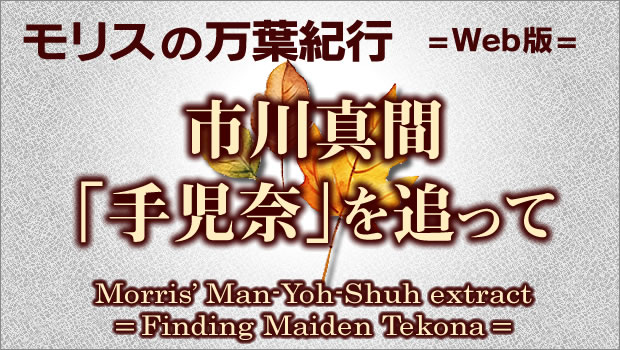
森 島 英 一 H. (Morris) Morishima
市川真間「手児奈」を追って…1ページ
Introducing samples of “Tanka” poems about
Maiden Tekona and Mama Inlet (which used to exist),
sung in Man-Yoh-Shuh
Have you heard about “Man-Yoh-Shuh” ? It literally means “Collection of Ten Thousand Leaves“, and it points to
a collection of more than 4,500 poems, created and sung during 7th to 8th centuries (Nara Age, collectively).
It is a collection of poems made by all the different people of Japan then – different in social statuses, professions,
and sometimes anonymous – and “different people” include Emperors/Empresses, Nobilities, high-ranking and middleranking
government officials, consorts, soldiers, farmers, etc. etc.
Among those some 4,500 poems listed in Man-Yoh-Shuh, there are half a dozen pieces of work singing about Mama
(an area in today’s Ichikawa City, and the name dates back to Nara Age), and, in particular, about Maiden Tekona.
Some of you may have heard about Tekona Shrine (adjacent to a bigger temple of Guhoh-Ji), an about 14-minute walk
from Ichikawa Station, and it is the site where Maiden Tekona is enshrined.
For those interested, I picked up from Man-Yoh-Shuh three poems singing about Maiden Tekona and Mama Inlet,
whose folkore legend is still remembered over time among local people of Ichikawa as well as nation-wide Tanka fans.
Best regards,
万葉紀行
「手児奈」や「真間の継ぎ橋」「真間の入り江」を歌った万葉歌の紹介
皆さんは「万葉集」ってご存じでしょうか?「万葉集」は文字通りに訳すと「一万枚の木の葉を集めたもの」と言うことですが、その意味するところは、7世紀から8世紀の奈良時代の日本で作られ、歌われた4,500首以上の短歌をまとめた詩集を指しています。
この詩集に集められた短歌は、当時の日本におけるいろいろな異なる階層、職業、立場の人々の作品です―多くの、名前の特定されていない人々の作品もあります。そして、「異なる階層」の人々としては、上は天皇・女性天皇やその配偶者、その他の貴族階級、そして上級・中級官僚、兵士(防人)、農民まで見られます。
これら4,500余首の短歌中、10首程の作品にあって、真間(現在の市川市の一部の地名として残っています)につき、そして特に、真間の乙女「手児奈」(テコナ)が歌われています。皆さんの中には、「手児奈霊神堂」(弘法寺=グホウジ)という大きな寺院の傘下となっている)につき見聞きされた方もいらっしゃるのではないでしょうか、市川駅から徒歩14分ほどの所にあり、ここに真間の乙女「手児奈」が祀られています。
ご興味のある向きのために、万葉集から三首、乙女「手児奈」や「真間の入り江」を歌った短歌を紹介いたします。
これらの短歌は、7世紀の時代から引き継がれてきている民衆伝説を歌っており、現代に至るまで、市川の住民や日本
全国の短歌ファンにより愛され続けています。
Hidekazu (Morris) Morishima
Tel.047‐371-7790 Mobile.090-6506-1406
PC address:morishima@morishiplan.com
URL: https://morishiplan.com
(Layout and printing by Printopia)
森 島 英 一
モリシップラン・オフィス
〒272-0826
千葉県市川市真間4-11-F301
市川真間「手児奈」を追って…2ページ
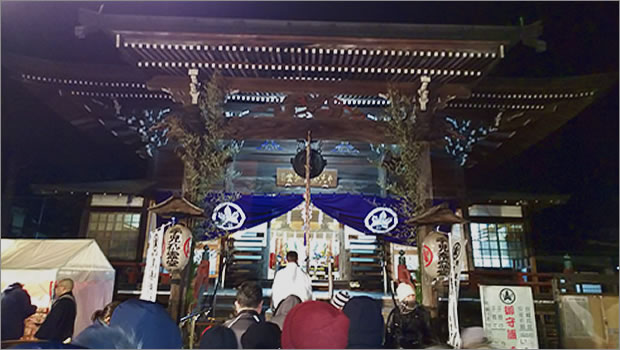
(Tekona shrine in the New years Eve, photo by HM)
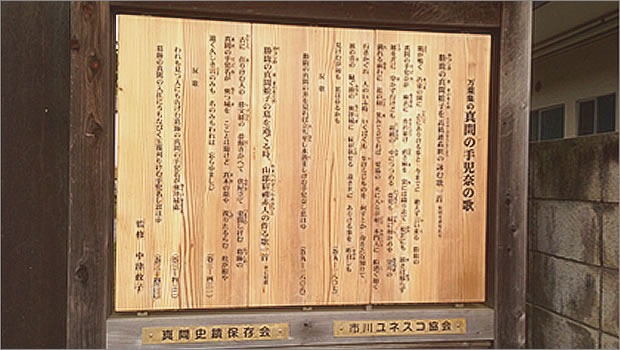
万葉集の真間の手児奈の歌
市川真間「手児奈」を追って…3ページ
There is a folklore legend about Maiden Tekona – it’s a story handed down as an oral tradition even from before the time of Man-Yoh-Shuh.
There was said to be a maiden in Mama Village who was beautiful and diligent in her work for her family
and neighborhood people, especially on the chore of drawing water from a nearby well, and reaping seaweeds from the Inlet of Mama, carrying them home and for the village people.
Many young men were infatuated with her kind character as well as her beauty, and tried to court her for marriage. Tekona was at a loss on what to do about those proposals, and was embarrassed at the thought of having to disappoint other men if she choose one particular one, and Tekona’s kind heart could not decide
to clear such an unbearable situation. Finally, she decided to throw herself in the sea of Mama Inlet.
Various people from near and far heard about this sad incident and visited her grave and dedicated poems.
This piece of poem by the famous poet Yamabe-no Akahito is one and several more are listed in the Collection.
真間の乙女「手児奈」に関する民間伝説なるものが残っており、これは、万葉集が編纂された時代より以前から引き継がれてきていた民話です。
この民話によれば、その昔、当時の真間村落に、家族のためにも近所の村人たちのためにも一生懸命働く、姿かたちと心根の美しい乙女がいました。乙女「手児奈」は、特に、近くの井戸から水を汲みだし運ぶ仕事や、真間の入り江から刈り取った海藻を村に運び、家族や村人に配る仕事を毎日熱心にやっていま
した。
多くの若者たちは、手児奈の美しい姿かたちと心根に魂を奪われるように惹かれ、求愛、求婚の申し出があとを絶たずやって来ます。手児奈は、この状況に戸惑いを覚えるばかりで、むしろ、一人の若者の申し出に応ずれば、他の多くの若者の心を痛めてしまう結果となることに、自ら心を悩ます結果となり、その難しい状況に耐えきれなくなります。そして遂には、手児奈は自分自身、真間の入り江に身を投ずる決心をし、悲しい結末となるのでした。多くの人々がこの悲しい顛末を聞きつけ、近く、遠くを問わず手児奈の墓所を訪れ、短歌を奉じる形で、手児奈の死を弔いました。下段に紹介する、当時の高名な歌人、山部赤人の短歌はその一つであり、万葉集にはその他数首が掲載されています。
市川真間「手児奈」を追って…4ページ
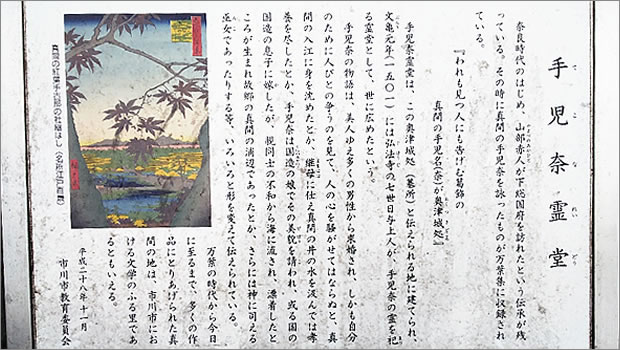
“Guide Panel with an Ukiyoe of Tekona Shrine” ,shot by HM 10/2019
我も見つ
人にも告げむ
葛飾の
真間の手児奈が
奥つ城処
(山部宿禰赤人 巻3-432)
Waremo mitsu
Hitonimo tsugemu
Katsushikano
Mama-no Tekona ga
Okutsuki dokoro
I saw it for sure,
I’d tell people on it too
In Katsushika,
‘Tis the grave of Tekona,
Folklore maiden of Mama!
(Vol.3-432)
市川真間「手児奈」を追って…5ページ
★Yamabe-no Akahito's poem
葛飾の
真間の入江に
うちなびく
玉藻刈りけむ
手児奈し思ほゆ
(山部宿禰赤人 巻3-433)
Katsushika-no
Mama-no irie ni
Uchinabiku
Tamamo karikemu
Tekona shi omohoyu
Those precious seaweeds,
Swaying in the heaving waves
In Mama’ s Inlet-
Would Maiden Tekona reap,
Carry them home still as wet?
(Vol.3-433)
Seaweeds were, and actually are still today after 1,300 years, an important and useful food material in Japan, as some
of you know through your own experience in Japanese food culture. In this poem, the poet, Akahito again, sings out
his imagination of the heroine of a folk tale in Mama area, Maiden Tekona. In the background of this poem is that sad
story of this maiden having had to sacrifice herself due to her kind – perhaps too kind –feeling to other people.
海藻類は1300年前の当時も、そして現在も、日本での大切で役に立つ食料品ですね。これは、あなたも日本滞在中に経験なさったことからも納得できると思います。この短歌では、歌人・山部赤人は、真間地域の伝説のヒロイン、乙女「手児奈」に想いをいたし謳いあげています。この短歌の背景には勿論、あの悲しい物語―この乙女の、人々に対する優しい、むしろ優しすぎるほどの感情のため自分自身を犠牲にするしかなかった顛末―が垣間見れますね。
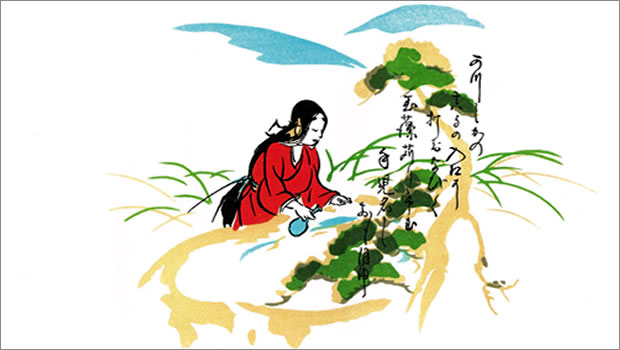
(An illustration by Chimoto confectionary)
市川真間「手児奈」を追って…6ページ
Toward the end of Daimon Dohri (Great Gate Lane) in Ichikawa City, a 15-minute stroll from Ichikawa Station (JR), there is Tekona ReijinDoh (“shrine”, literally?) on your right, and a narrow path leads you to the main hall enshrining Tekona’s soul.
Although the name of place “Reijin-Doh” gives an impression that it is a Shinto shrine, with Torii(gatepost) straddling the path entrance, but the guide sentences put up there remind you that this hall is a part of a bigger temple, Guhoh-Ji, situated up the hill nearby, and thus a Buddhist temple hall, and the worshipping procedure shall be as per Buddhist style, rather than Shinto one. Never mind the religious sectarian discussion,
and the legend and poems are there.
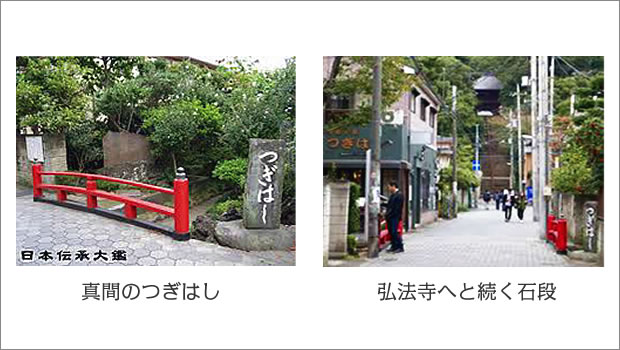
The main temple, Guhoh-Ji, is situated at the top of a stone stairway going up from the end of Daimon Dohri. Up there you will be welcomed (provided you a good person!) by a daimon (Great Gate) with one each Nioh (Guardian God looking like an angry hulk) on either side of the Gate. You may also enjoy strolling in the temple grounds, large and tranquil, full of greenery.
市川市の大門通り(JR市川駅から徒歩15分)の終わりに近づくと右手に手児奈霊神堂(名前からすると神社?)があり、霊神堂に入る小道があります。その奥には手児奈の魂を祀るお堂があります。
霊神堂という名前から、神社であろうとの印象を受けますが、参道の入り口にある案内板によると、このお堂は、大門通りから石段を上がった台地にある弘法寺(グホウジ)という大寺の所属施設とのことで、従って仏教のお堂である、との由。なので、霊神堂への参詣のスタイルも仏教方式でお願いします、神道方式ではなく、との説明です。まあ、宗教上の厳密な宗派論はさておき、手児奈の伝説と短歌が大事ですね。
その、主体となる弘法寺(グホウジ)本体は、大門通りの終点から石段を上がった広大な境内にあります。
そこに上ると、大門が控えており両側には、怒れる巨人の姿をした仁王殿が出迎えてくれます。あなたが善良なる市民である限り、怖がることはありません、歓迎してくれますよ!大門をくぐれば、広い、緑豊かな境内がひろがっており、散歩をお楽しみ頂けます。
市川真間「手児奈」を追って…7ページ
★Poet’s name unknown
足音せず
行かむ駒もが
葛飾の
真間の継橋
やまず通はむ
(詠み人知らず 巻14-3387)
Ano oto sezu
Ikamu Koma moga
Katsushika-no
Mama-no Tsugihashi
Yamazu kayohamu
If I had a colt,
That makes no noise in its hooves,
When I let it trot
On the Plank Bridge of Mama,
I’d come every day to you!
(Vol.14-3387)
History has that there once was an inlet of sea coming in to Mama area, and the traffic was made via simple plank bridges installed here and there, people used them to come and go for fishing and seaweed reaping in the inlet.
This song sings about a man’s wish that, if he had a small horse which does not make too much noise with its hooves,
when trotting on those plank bridges, he would come and see his sweetheart every day quietly and incognito.
Hence no name of the songwriter!? – (joke LoL)
There is a small monument together with a makeshift scarlet-painted wooden bridge at a place half way through Daimon Dohri.
歴史を辿ってみると、真間地域には外海の入り江があったこと、そして真間での往来は多くの場合、あちらこちらに設えてあった素朴な木製の継橋を使って行われたこと、そして人々は継橋を通って入り江での漁業や海藻刈りに勤しんでいたことが伝えられています。
この短歌は、作者の男の想いとして、自分の乗る若馬が、パカパカと蹄(ヒヅメ)の音を上げないで継橋を渡ってくれたなら、気兼ねなく、毎日でも想いをよせる娘のもとに忍んで通えるのに…と嘆いているものです。お忍びの歌なので、作者名が明らかではない?(笑)
大門通り中ほどに、継橋に関する小さな石碑があり、道路には、朱色に塗った継橋のミニ版が復元されています。
市川真間「手児奈」を追って…最終ページ
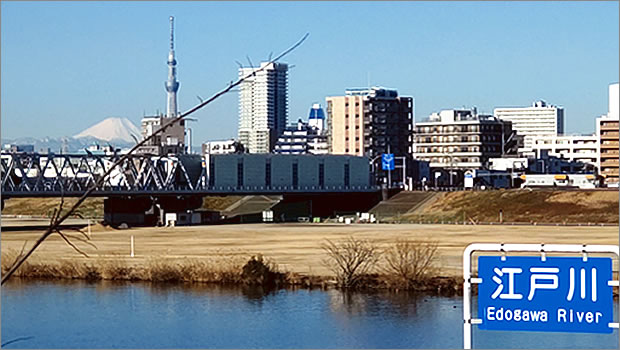
(Viewing Mt.Fuji from Ichikawa side Edogawa river , photo by HM)
Hope you enjoy your stay in Ichikawa!
(Nov.2024)
● BILOG“MAN-YOH-SHUH”topに戻る
モリシップラン・オフィス
PC address: morishima@morishiplan.com
URL: http://www.morishiplan.com